Kaolinite vs dickite: telling them apart in SWIR spectra
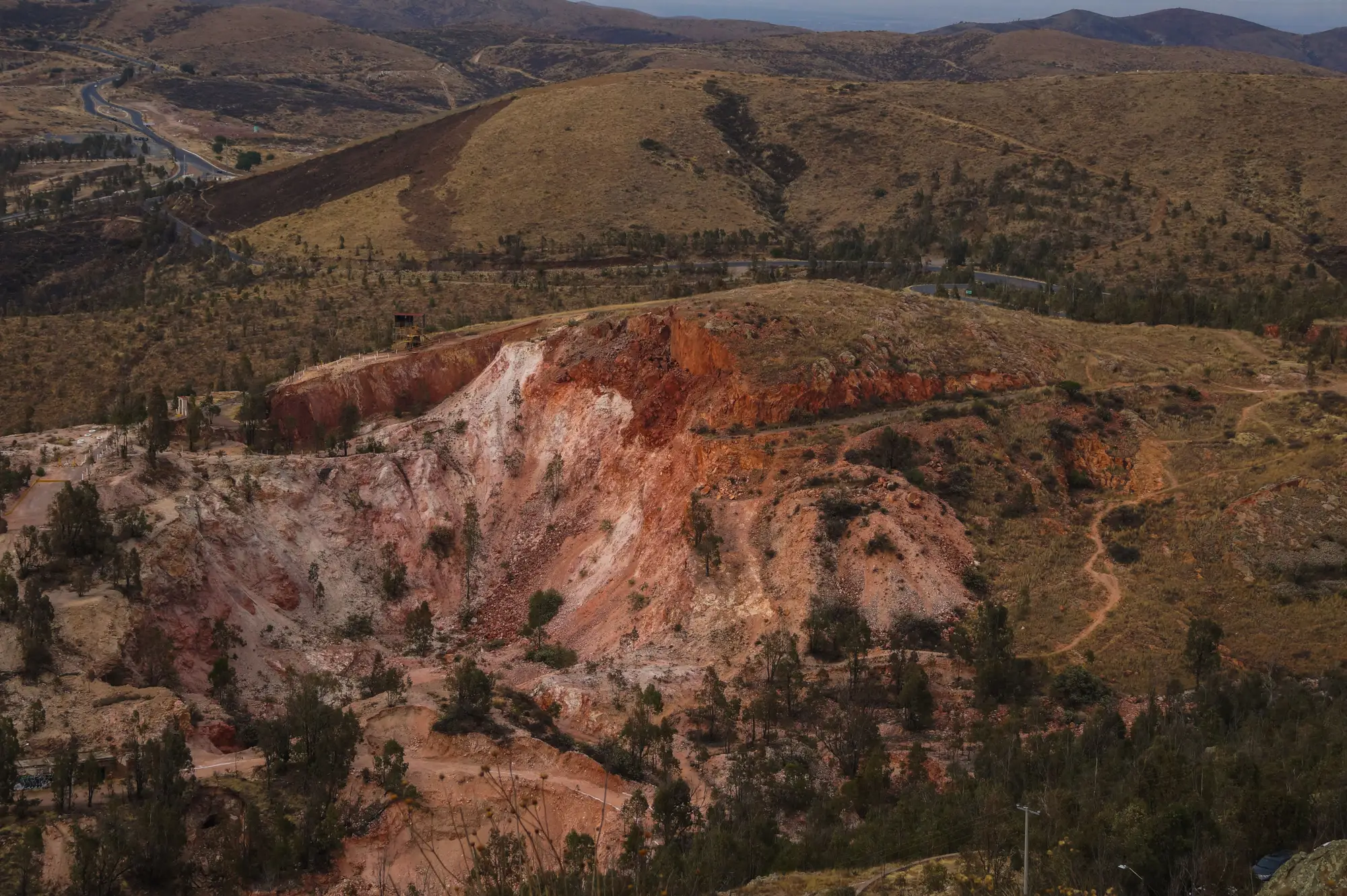
Anyone who has logged chips with a PIMA or a TerraSpec knows the kaolin group gives up its name reluctantly. Kaolinite, dickite, nacrite, and halloysite are all the same formula, Al2Si2O5(OH)4, dressed in different stacking orders. The bulk mineralogy software will often just call the whole family "kaolinite" unless you push it, and that's where a vectoring decision can go sideways in an advanced argillic halo.
Why the kaolin group confuses first-pass logging
In a porphyry-epithermal lithocap, kaolinite and dickite rarely sit in neat, separate zones. They interfinger, overprint each other, and show up together in the same few metres of core. Auto-classification routines in TSG or ENVI tend to lump them because the overall spectral shape, a broad Al-OH absorption near 2200 nm riding on a kaolin-type 1.4 µm doublet, looks similar at a glance. The difference that actually matters for targeting is in the fine structure of that 2200 nm feature, and it's easy to skim past on a quick continuum-removed plot.
The 2200 nm doublet: what separates kaolinite from dickite
Both minerals split the Al-OH absorption into two minima, roughly in the 2160 to 2210 nm range. In kaolinite, especially poorly ordered or disordered kaolinite, that doublet is shallow and the two minima blend into something closer to a shoulder than two clean troughs. Dickite, because its layer stacking is more ordered, resolves the same doublet into two sharp, well-separated absorptions. Side by side on a continuum-removed spectrum, dickite looks like it was drawn with a ruler and kaolinite looks like it was smudged.
Well-crystallized kaolinite sits somewhere in between, which is exactly the trap. A spectrum that's "pretty good" kaolinite can start to resemble dickite on doublet depth alone, which is why crystallinity indices built purely on depth ratio need a second check, usually the position and width of the individual minima, before you call dickite with confidence.
Doublet depth as a field proxy for crystallinity
Doublet depth, the relative absorption strength of the two component minima against the continuum, is the metric most spectral geologists reach for first because it's fast and it's built into standard processing. Deeper, better-resolved doublets track with higher structural order, and in a hydrothermal system that order correlates loosely with formation temperature and depth within the lithocap. Dickite tends to dominate in the hotter, deeper parts of an advanced argillic blanket; kaolinite, particularly the disordered variety, tends to sit higher and cooler, often near the paleo-water table or in zones that have seen more supergene overprint.
That's not a hard rule you can hang a drill collar on by itself. Alunite chemistry, pyrophyllite distribution, and the diaspore-zunyite assemblage all carry more weight for vectoring than doublet depth on its own. But when the kaolin-group spectra across a ridge start trending from shallow, smudged doublets to sharp, deep ones along a particular strike, that's worth walking down before you walk away from it.
Where this actually changes a drilling decision
A trained eye picks out dickite in a single spectrum in seconds at the core shed. The real work is doing that consistently across a few hundred line-kilometres of float and outcrop before the rig moves, so the dickite-rich core of the lithocap shows up as a halo instead of a handful of scattered points that could just be noise. That's the gap a wide-swath hyperspectral pass over the whole tenement is built to close, turning point measurements into a continuous alteration layer you can walk a drill program against, which is the kind of first-pass map Mineral Mapping puts together from a single campaign flight.
FAQ
Can halloysite be confused with kaolinite or dickite in SWIR? Yes. Halloysite shares the kaolin-type doublet but usually shows a weaker, broader expression plus a distinct water feature near 1.9 µm, since it's hydrated and more disordered as a tubular clay. Depth of the water band is often the quicker tell than the doublet itself.
Does nacrite show up in exploration-scale SWIR surveys? It's the rarest of the kaolin polymorphs and spectrally close to dickite, so most campaign-scale interpretation won't try to split the two without ground-truth sampling.
If you're trying to turn scattered kaolin-group readings into a drilling target, that's the problem Mineral Mapping was built to solve.