Blog
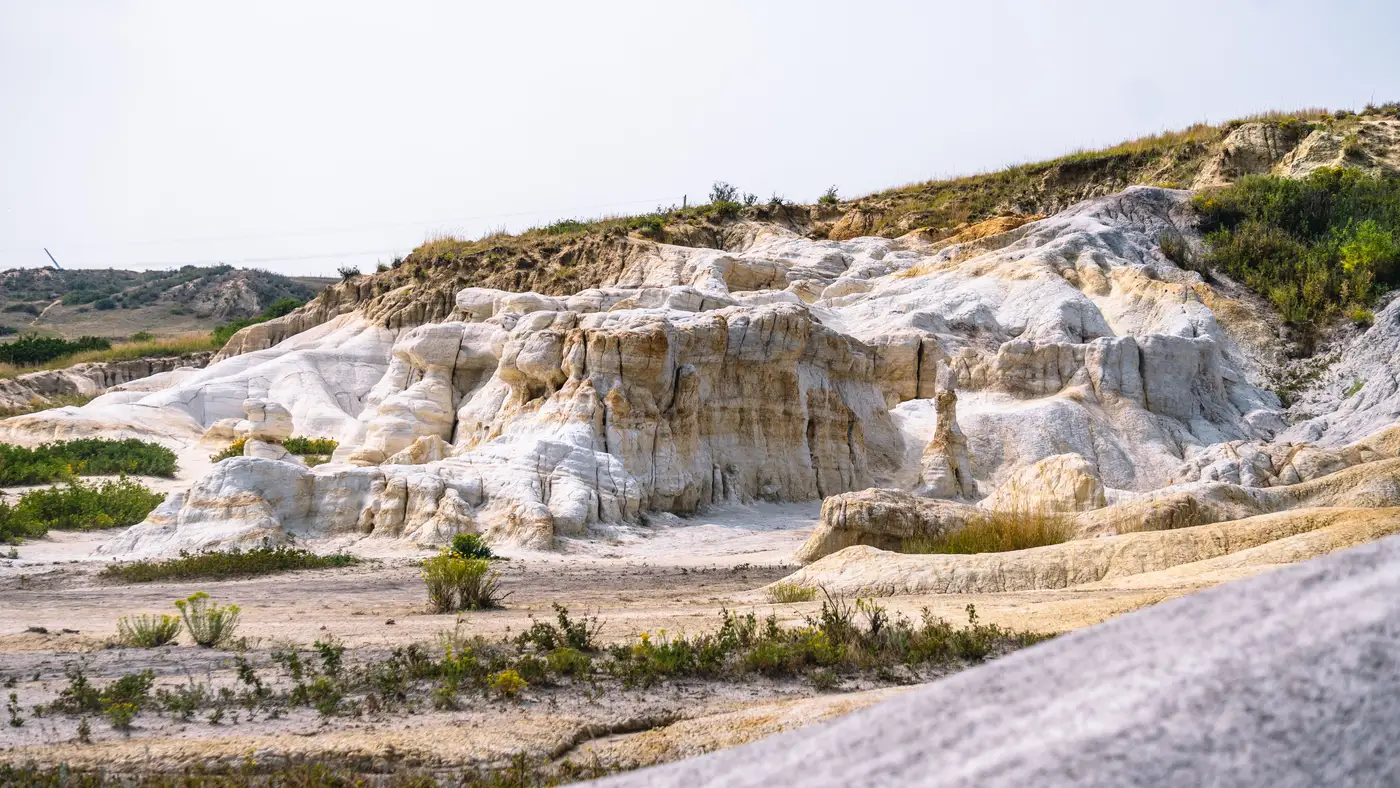 Soil geochemistry vs SWIR alteration mapping: which vectors a target first
A look at where SWIR alteration mapping sits against soil geochem in a porphyry target generation sequence, and why order matters for drill vectoring.
 Pathfinder elements vs. alteration minerals: what's the difference?
Pathfinder elements show up on the assay sheet; alteration minerals show up in the rock. How the two differ, and why porphyry targeting needs both.
- Field notes: the ridge the drill rigs nearly skipped
A field note on a bleached, barren-looking ridge that almost got dropped from the drill program, and what the SWIR pass found underneath it.
 Picking pixel size for a wide-swath hyperspectral alteration survey
A field geologist's guide to GSD trade-offs for porphyry alteration mapping: why 10-30 m pixels work for campaign-scale vectoring.
- Calcite, dolomite, ankerite: telling carbonate species apart in SWIR
How the carbonate absorption feature shifts with calcite, dolomite and ankerite, and why that shift matters for propylitic zoning in the field.
 Skarn alteration signatures in SWIR hyperspectral imagery: what shows up
Garnet and pyroxene are nearly invisible in SWIR. Here's what mineralogy lights up a hyperspectral cube, and how to read it.
- Field notes: the week the anomaly ran past our pegs
A staking decision made on outcrop alone, and the October soil line that showed the alteration halo kept going past the tenement boundary.
- Alteration map to drill fence: setting spacing on a porphyry vector
How to read a SWIR alteration halo's zonation and convert its width and orientation into a drill fence spacing plan for a porphyry target.
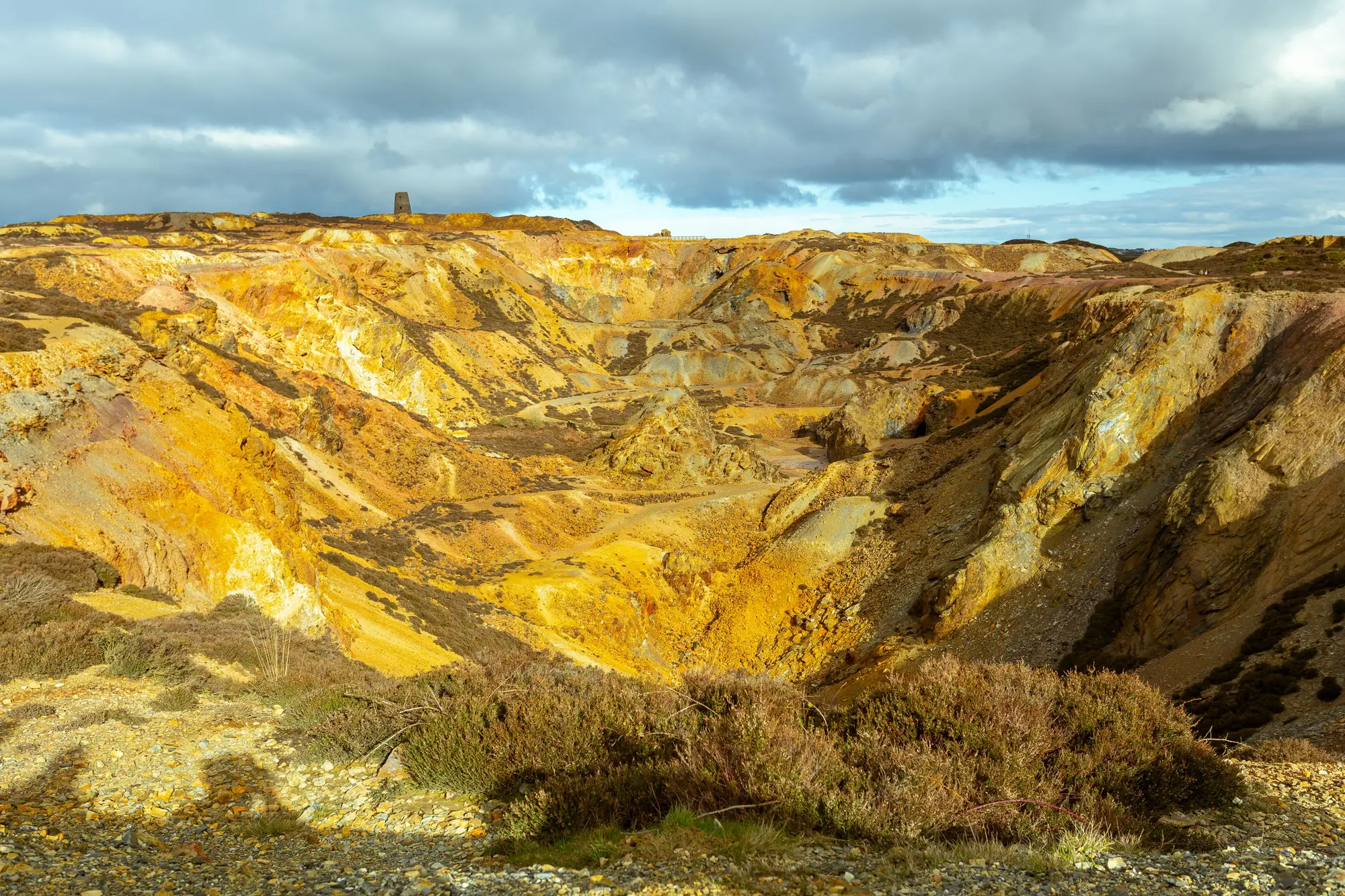 Jarosite vs. hematite vs. goethite: telling them apart in SWIR imagery
How to tell hematite, goethite, and jarosite apart using SWIR spectral signatures, and what their zonation across a gossan tells you.
- Spectral resolution and clay separation: why band count beats pixel size
Kaolinite and illite sit 20-30 nm apart in SWIR. Here's why spectral resolution, not pixel size, is what lets a sensor tell them apart.
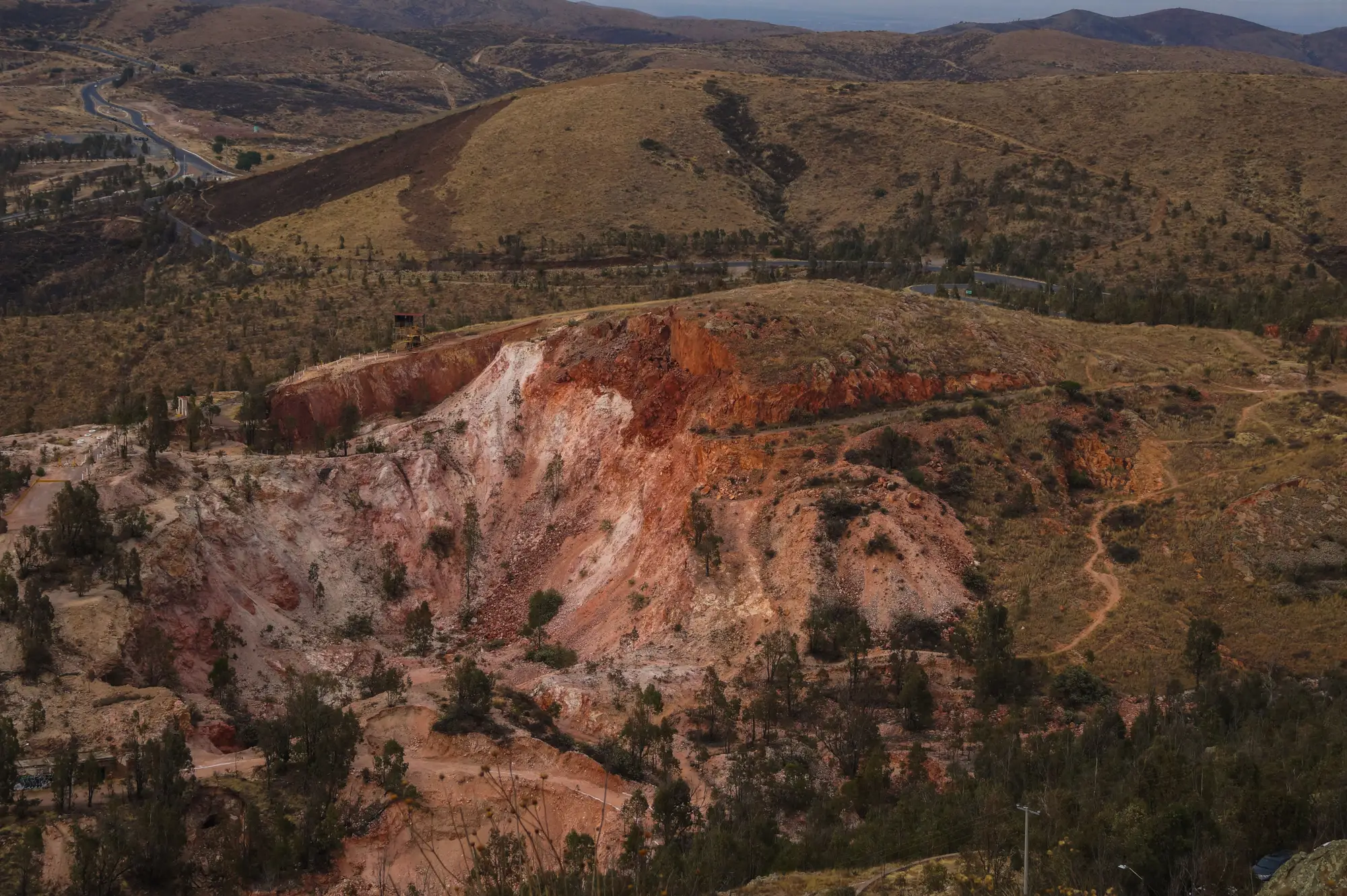 Field notes: the halo that showed up three ridgelines over
A field season spent chasing clay and iron-oxide float, then a SWIR pass turns up the same signature two drainages past where anyone walked.
- Kaolinite, dickite and alunite in a SWIR scan: how to tell them apart
How to separate kaolinite, dickite and alunite in SWIR spectra, and where advanced argillic stops and intermediate argillic starts.
- Kaolinite vs dickite: telling them apart in SWIR spectra
How to separate kaolinite from dickite in SWIR spectra using the 2200 nm doublet, and why it matters for vectoring a lithocap.
- What the Al-OH absorption feature at 2200 nm tells you about clay alteration
A field guide to the Al-OH absorption feature near 2200 nm in SWIR clay spectra and what its position tells you about mica mineralogy.
- Ground-truthing a SWIR alteration map before you spot a collar
A field method for checking a SWIR clay-carbonate-iron oxide map against outcrop before it drives drill targeting, not after.
- What is a leached cap in porphyry exploration?
A field guide to leached caps in porphyry systems: how they differ from gossans, what boxwork tells you, and where the supergene blanket sits below.
- ASTER vs airborne hyperspectral for a first-pass alteration vector
A field geologist's comparison of ASTER band ratios and airborne hyperspectral surveys for vectoring drill targets before commissioning a campaign.
- Propylitic vs phyllic alteration in SWIR: chlorite-epidote vs sericite
How to separate propylitic chlorite-epidote from phyllic sericite in SWIR data, and what that zonation looks like across a wide-swath hyperspectral pass.
- Illite crystallinity vs white mica chemistry for vectoring a porphyry centre
Illite crystallinity and white mica Al-OH wavelength both come off the same mineral, but only one gives you a vector toward a porphyry centre.
- What is an alteration halo in porphyry exploration?
A plain explanation of porphyry alteration zoning, why the pattern reads as a halo rather than a bullseye, and how to see it across a tenement.